
EVERYDAY SCIENCE · TIME
Why do we have leap years?
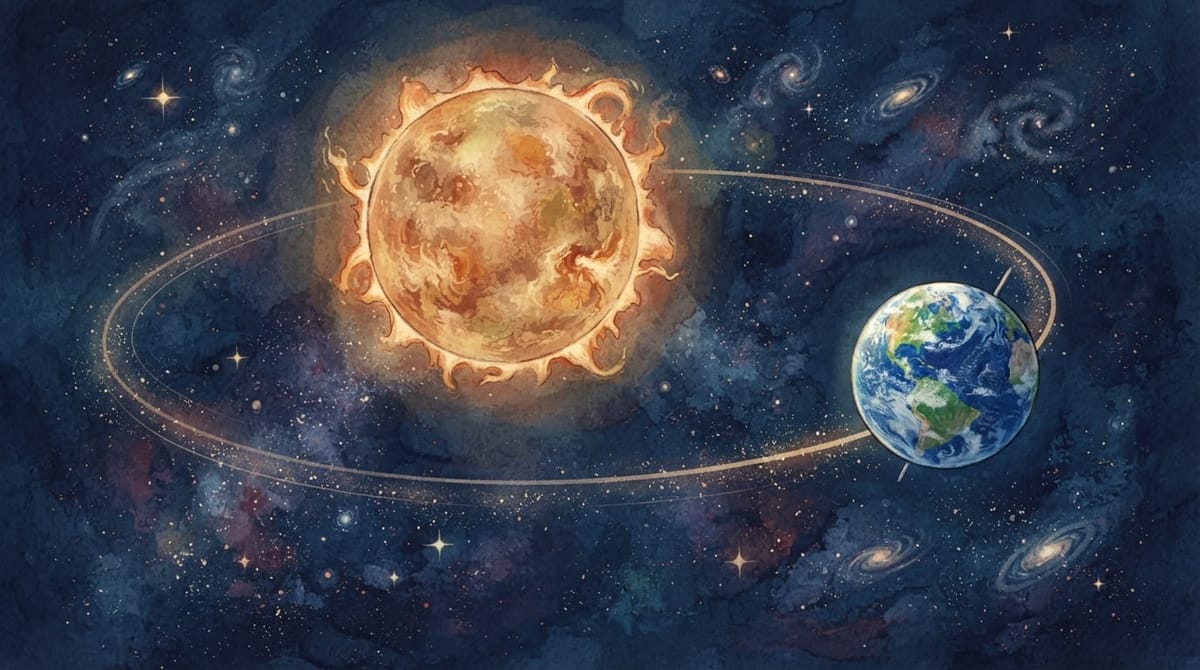
Earth takes about 365 and a quarter days to go once round the Sun, but a calendar can only hold whole days. So three years in four we stop counting a quarter of a day early, and in the fourth we add 29 February to catch up. Without it the calendar would slide through the seasons.
- A year is 365 and a quarter days
- Four quarters make a leap day
- Century years fix the overshoot
A year that will not come out even
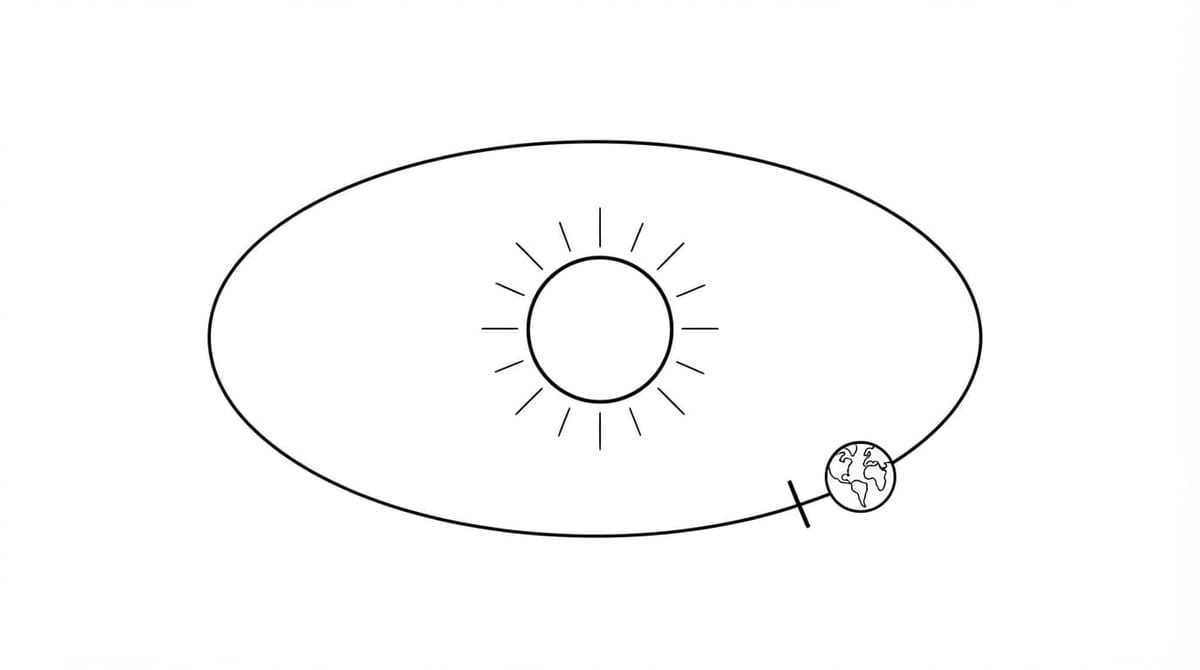
A year is the time Earth takes to come back to the same point in its seasons, and that is not a whole number of days. It is 365.2422. After 365 days Earth has not quite arrived where it started: it still has about a quarter of a day, close to six hours, to go.
Nothing is wrong with Earth. The trouble is only that we count in whole days and the planet does not.
Read the source: Royal Museums Greenwich: Which years are leap years?
Four quarters make a day
Ignore the leftover and the calendar starts each new year a quarter of a day too soon. After four years the gap is one whole day. So every fourth year gets an extra day, 29 February, and has 366 days. Four calendar years then add up to 1,461 days, which is almost exactly four trips round the Sun.
Julius Caesar set this rule when he established the Julian calendar in 46 BC: three years of 365 days, then one of 366, an average of 365.25.
Read the source: Royal Museums Greenwich: Which years are leap years?
What would happen without it
A quarter of a day sounds too small to matter. But it adds up to about 24 days every century. With no leap days at all the calendar would run ahead of the seasons, and after about 700 years northern summers would begin in December.
The leap day does not change anything about Earth. It only corrects our count, so that the calendar and the seasons stay together.
Read the source: Smithsonian National Air and Space Museum: The science of leap year
A quarter is slightly too much
The real figure, 365.2422 days, is a little under 365 and a quarter. So Caesar’s calendar added a touch too much: about 11 minutes a year. By 1582 those minutes had piled up to ten days, and the first day of spring was falling on 11 March instead of 21 March.
Pope Gregory XIII’s reform did two things. It dropped ten days, so that the day after 4 October 1582 was 15 October. And it changed the rule: a year ending in 00 is a leap year only if it divides by 400. So 1700, 1800 and 1900 had no 29 February, 2000 did, and 2100 will not. Catholic countries switched at once; England and its American colonies waited until 1752.
With that rule the calendar year averages 365.2425 days. What is left over comes to about one day in three thousand years.
Read the source: OpenStax Astronomy 2e: The calendar · Smithsonian National Air and Space Museum: The science of leap year
A question worth taking into the lesson
“Why does dropping three leap days every 400 years make up for 11 minutes a year?” is a sum worth doing aloud. Ask Clevaa to draw Earth coming up short of its start mark, then to add up the quarters year by year.
Then explain it back: the year is about 365 and a quarter days, four quarters make a leap day, a quarter is slightly too much, and century years that do not divide by 400 give the extra back.
A few useful answers
When is the next leap year?
2028. After that come 2032 and 2036.
Is every fourth year a leap year?
Almost. A year ending in 00 is a leap year only if it divides by 400, so 1900 was not one, 2000 was, and 2100 will not be.
How long is a year, exactly?
About 365.2422 days, which is 365 days, 5 hours and about 49 minutes.
TAKE THE NEXT QUESTION WITH YOU
Turn the explanation into a conversation.
Open this topic in Clevaa, choose a level, and ask the part you want to explore.
Hear leap years explained with pictures ↗You choose when to start. Session availability and usage limits may apply.
Keep exploring
 EVERYDAY SCIENCE · SKY
Why does the Moon change shape?
The Moon is always half lit by the Sun. As it circles the Earth each month we see that lit half from a changing angle: none of it at new Moon, all of it at full Moon. Why Earth’s shadow is not the cause.
Explore EVERYDAY SCIENCE · OCEANS
Why does the sea have tides?
The Moon pulls the near side of Earth harder than the far side, so the ocean stretches into two bulges and the spinning Earth carries every coast through them. Why there are two high tides a day, and what the Sun adds.
Explore A CONVERSATION WITH YOUR CURIOSITYAsk it the way you would ask a person.
Talk through a question with Clevaa, a voice AI tutor with visual explanations. Ask follow-ups, request a simpler example, or type whenever you prefer.
Explore