
EVERYDAY SCIENCE · OCEANS
Why does the sea have tides?
Tides come from the Moon’s gravity pulling unevenly across the Earth. The water nearest the Moon is pulled hardest and the far side least, so the ocean stretches into two bulges, one facing the Moon and one away from it. The Earth turns through both every day, which is why most coasts get two high tides.
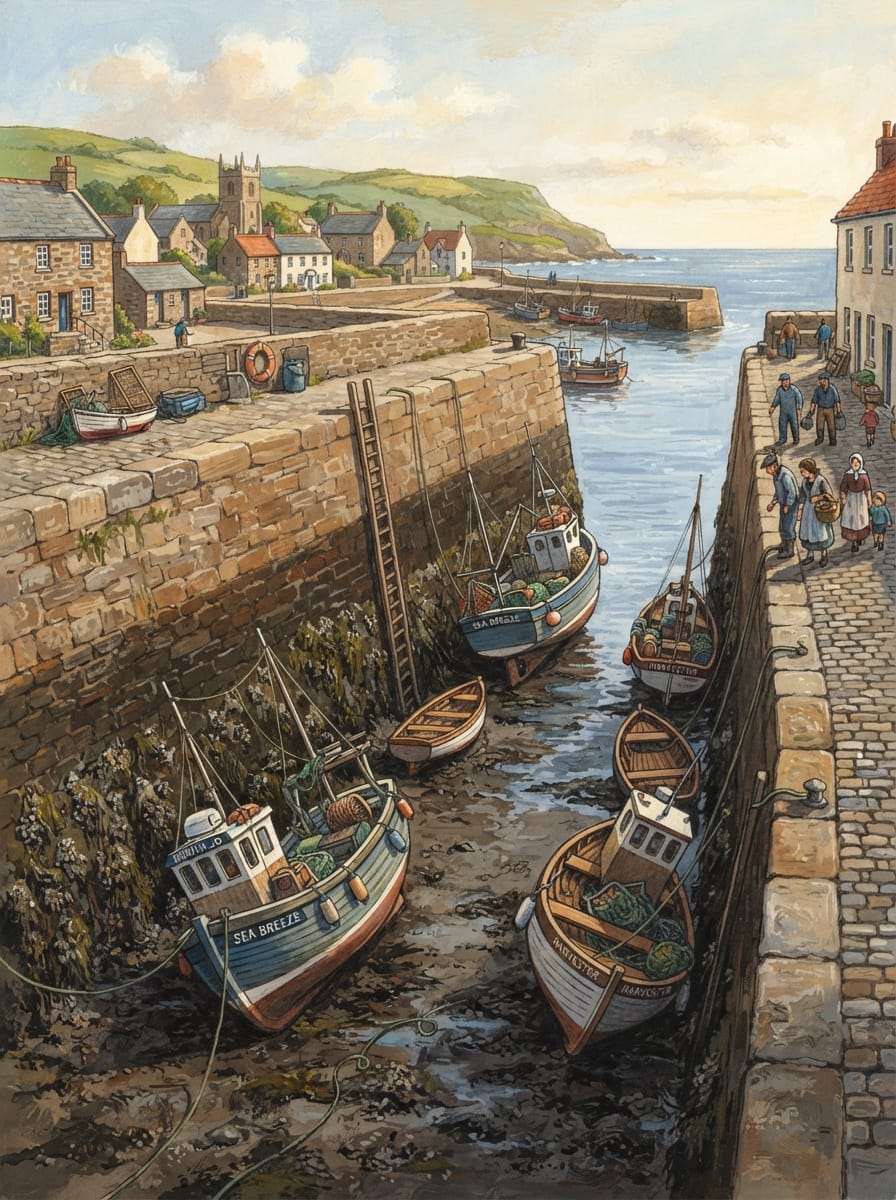
- Gravity weakens with distance
- Two bulges form
- The Earth spins through them
The pull is uneven
Line up three points: the side of Earth nearest the Moon, Earth’s centre, and the far side. Gravity weakens with distance, so the near side feels the strongest tug, the centre a middling one, and the far side the weakest. It is that difference across the planet, not the pull itself, that makes a tide.
Newton explained this in 1687: the tides are the gravitational attraction of the Moon and the Sun on the oceans.
Read the source: NOAA National Ocean Service: What causes tides?
Two bulges, one on each side
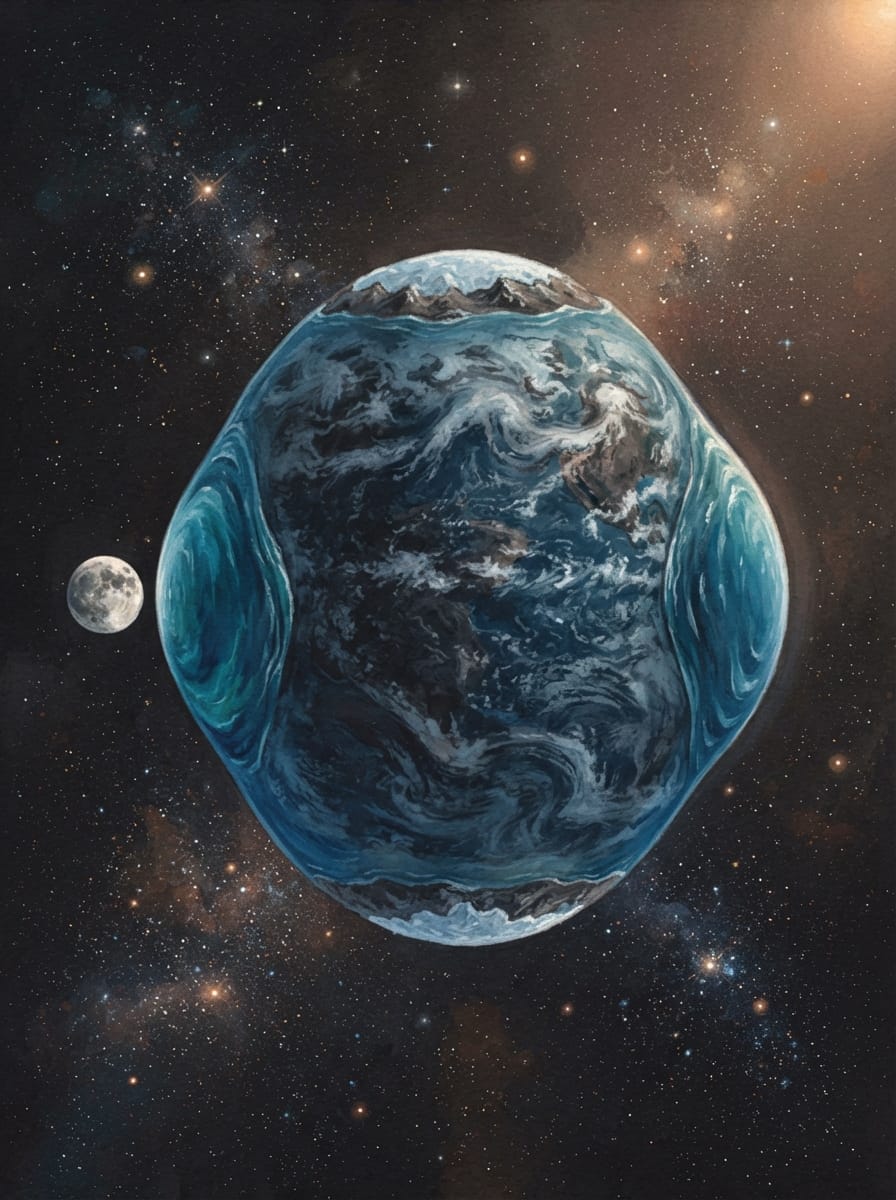
The near-side water is pulled ahead of the planet, so it heaps up towards the Moon. On the far side the Moon’s pull is weaker than the water’s tendency to keep moving in a straight line, so that water is left behind and heaps up away from the Moon. Between the two bulges the ocean is thinned: that belt is low tide.
A common mix-up is to credit the far bulge to a spinning force alone. It is the weakest pull leaving the water behind.
Read the source: NOAA National Ocean Service: Gravity, inertia and the two bulges
The Earth spins through them
The bulges stay lined up with the Moon while the Earth turns underneath them. Follow one harbour through a day: high tide under the near bulge, low tide six hours later in the thin belt, a second high tide as the far bulge arrives, low again. Because the Moon has moved along its orbit meanwhile, the cycle takes about 24 hours and 50 minutes, so each day’s tides come roughly 50 minutes later than the day before.
Some seas get only one high tide a day, because ocean basins have their own rhythms and the continents get in the way of a free-flowing bulge.
Read the source: NOAA National Ocean Service: Gravity, inertia and the two bulges
What the Sun adds: spring and neap tides
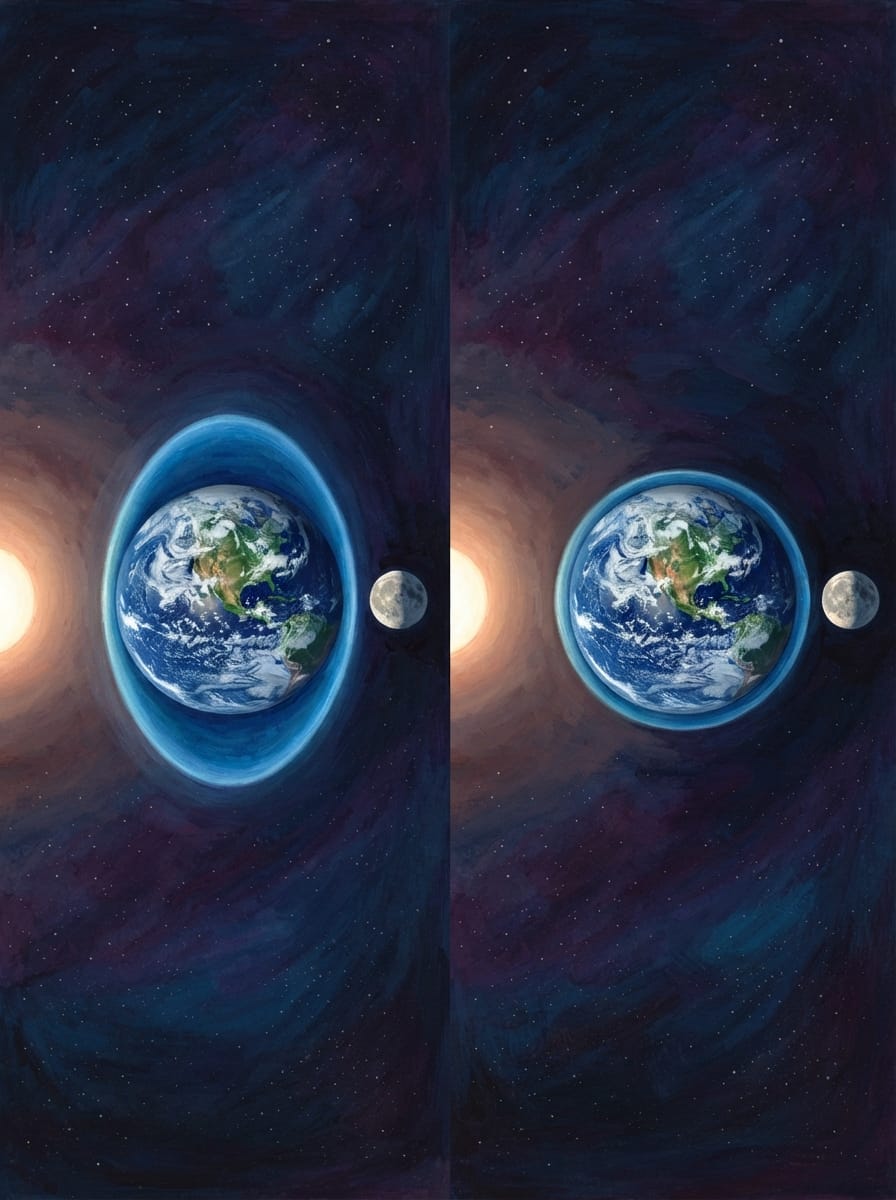
The Sun raises tides too, about half as strongly as the Moon: it is enormously more massive but about 390 times farther away, and the tide-raising difference in pull falls off steeply with distance. At new and full Moon the Sun and Moon line up and their stretches add, giving the month’s highest highs and lowest lows: spring tides, which have nothing to do with the season. A week later they sit at right angles and partly cancel: the smaller neap tides.
Coasts shape the result. A funnel-shaped bay crowds the incoming water into a narrowing head, which is how the Bay of Fundy swings more than ten metres while some seas barely move.
Read the source: NOAA National Ocean Service: What causes tides?
A question worth taking into the lesson
“If the Moon pulls the water, why is there a bulge on the side facing away?” is the question most people have never had answered. Ask Clevaa to draw the three pulls, then ask why a lake has almost no tide.
Then explain it back: the pull differs across the Earth, two bulges form, the Earth spins through them, and the Sun makes them bigger or smaller.
A few useful answers
Why are there two high tides a day?
Because there are two bulges, one towards the Moon and one away from it, and the turning Earth carries each coast through both in a little under 25 hours.
Do lakes have tides?
Only a few centimetres at most. The Moon’s pull hardly differs across a small basin, so wind and air pressure matter far more.
Why is a spring tide called that?
From the water springing up, not from the season. It happens twice a month, at new and full Moon.
TAKE THE NEXT QUESTION WITH YOU
Turn the explanation into a conversation.
Open this topic in Clevaa, choose a level, and ask the part you want to explore.
Hear tides explained with pictures ↗You choose when to start. Session availability and usage limits may apply.
Keep exploring
 EVERYDAY SCIENCE · LIGHT
Why is the sky blue?
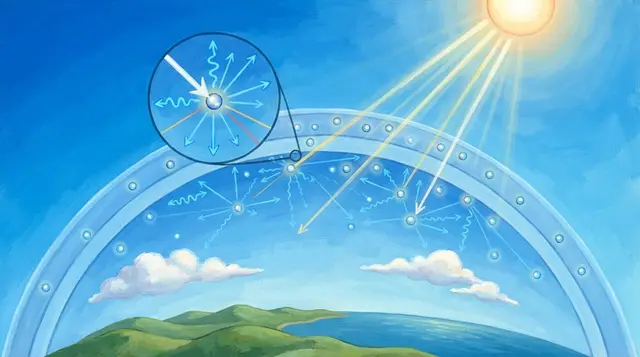
Air molecules scatter short blue wavelengths far more than red ones, so blue light reaches you from every part of the sky. Why sunsets are red, why clouds are white, and why the sky is not violet.
Explore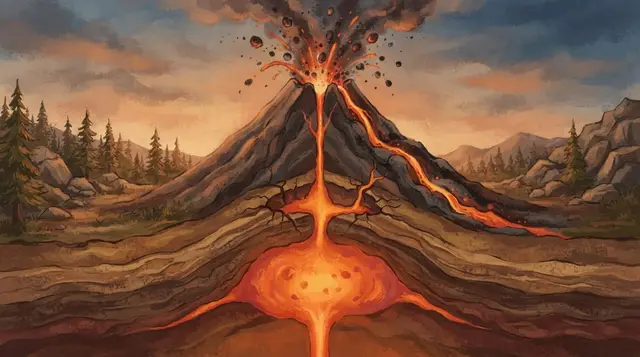 EVERYDAY SCIENCE · EARTH
Why do volcanoes erupt?
Magma rises because it is lighter than the rock around it; as pressure falls, dissolved gas comes out as bubbles and drives the eruption. Why some volcanoes ooze and others explode, and what warns us first.
Explore A CONVERSATION WITH YOUR CURIOSITYAsk it the way you would ask a person.
Talk through a question with Clevaa, a voice AI tutor with visual explanations. Ask follow-ups, request a simpler example, or type whenever you prefer.
Explore