
EVERYDAY SCIENCE · EARTH
Why do volcanoes erupt?
Volcanoes erupt because molten rock is lighter than the solid rock around it, so it rises. As it climbs, the pressure on it falls and the gas dissolved in it comes out as bubbles, the way a fizzy drink foams when you open it. Whether that ends in a quiet lava flow or an explosion depends on how sticky the magma is.
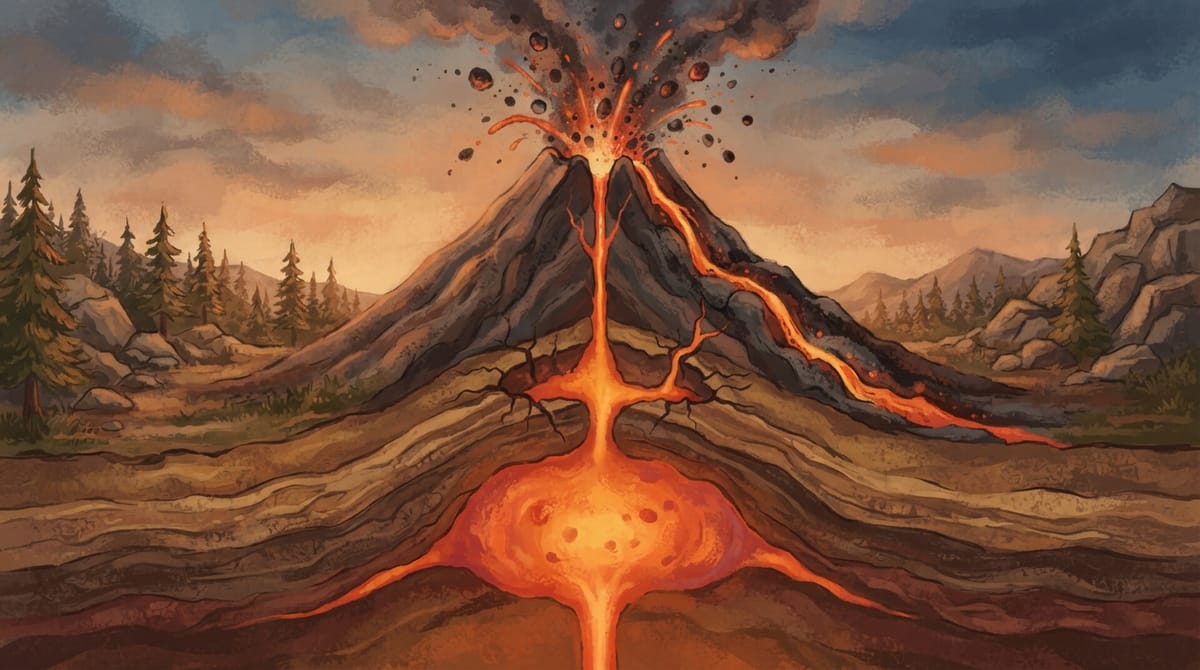
- Magma rises because it is lighter
- Falling pressure frees the gas
- Stickiness decides gentle or violent
Magma rises because it floats
Under a volcano sits a chamber of molten and partly molten rock. Melt is less dense than the solid rock it came from, so it floats upward, squeezing through cracks and collecting a few kilometres below the surface. That slow rise is the engine behind every eruption; the mantle beneath is not a sea of lava but solid rock that melts only a little, where water is added or pressure drops.
A common mix-up is to picture a hollow lake of lava under every volcano. Chambers are mostly hot crystal mush with melt between the crystals.
Read the source: U.S. National Park Service: Volcanic eruptions (with USGS diagrams)
Falling pressure frees the gas
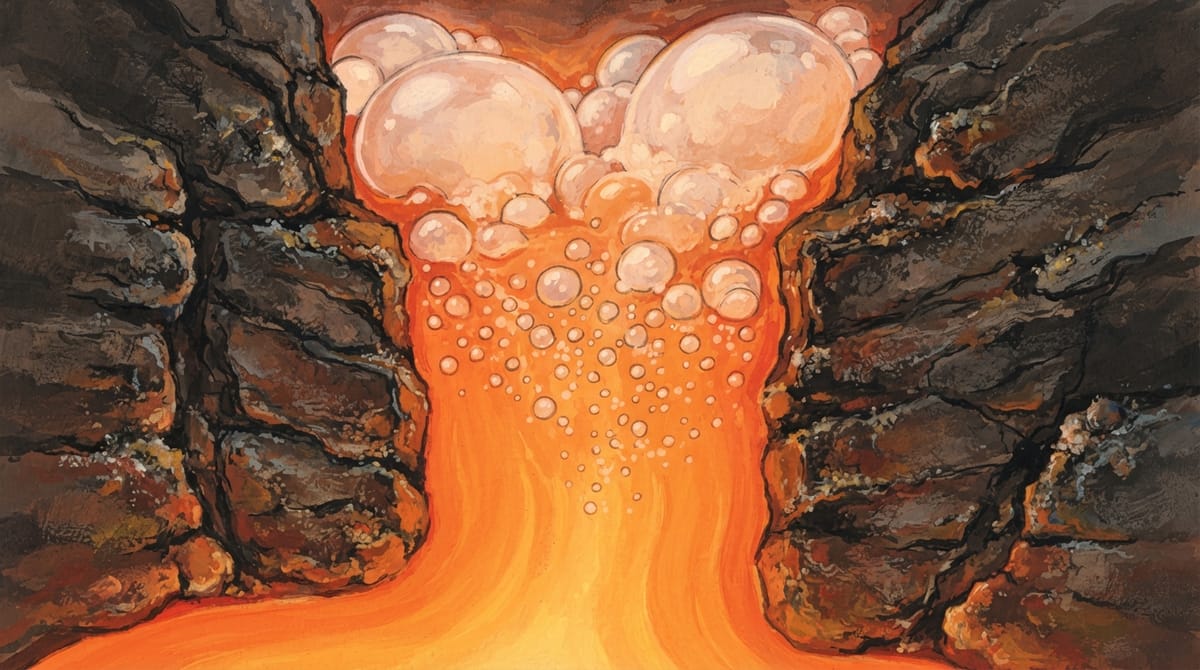
Magma carries dissolved gas, mostly water vapour and carbon dioxide. Deep down, the weight of the rock above keeps that gas dissolved, like the pressure inside a sealed bottle. As the magma climbs, the pressure drops, bubbles form and grow, and the expanding bubbles push the magma up faster. Heat alone does not cause an eruption; the release of gas as pressure falls does much of the work.
How fast the magma rises matters too. A slow climb lets gas leak away gently; a fast one forces it out all at once.
Read the source: U.S. National Park Service: Volcanic eruptions
Runny magma oozes, sticky magma explodes
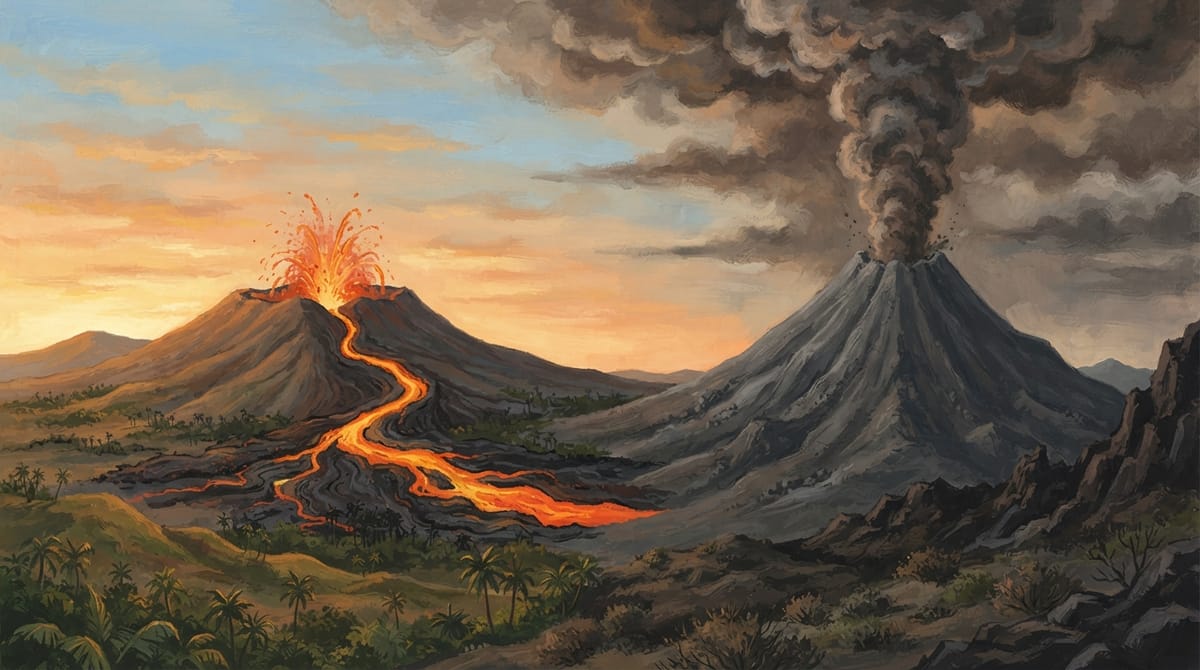
Two things decide the style of an eruption: how much gas the magma holds and how easily it flows. Runny basalt, the kind that erupts in Hawaii, holds little gas and lets bubbles escape, so it fountains and flows. Silica-rich magma is far stickier and holds much more gas; it resists the growing bubbles until the pressure shatters the magma into ash and hurls it out, as Mount St. Helens did in 1980.
So the same mechanism gives very different volcanoes. The rule of thumb: the higher the silica, the stickier the magma, and the stickier and gassier the magma, the more explosive the eruption.
Read the source: Volcano World, Oregon State University: Why are some eruptions gentle and others violent?
The warning signs
Rising magma cracks rock, so seismometers record swarms of small earthquakes. The ground bulges as the chamber inflates, which GPS stations and satellites can measure in centimetres. Gas vents give off more sulphur dioxide. Together these let observatories raise an alert days or weeks ahead.
They make an eruption likely, not certain: unrest often fades without one, and the exact time and size stay hard to forecast.
Read the source: U.S. National Park Service: Volcanic eruptions
A question worth taking into the lesson
“Why doesn’t the gas just leak out slowly every time?” is the question that leads to viscosity. Ask Clevaa to draw the two magmas side by side, then ask where the magma came from in the first place: water from a sinking plate, or rock rising and losing pressure.
Then explain it back: melt floats up, falling pressure frees the gas, the gas drives the rise, and stickiness decides whether it flows or explodes.
A few useful answers
Is the mantle made of lava?
No. The mantle is solid rock that creeps slowly. Only small fractions melt, where water is added or pressure drops, and that melt collects into magma.
Can eruptions be predicted?
Not exactly. Monitoring gives days-to-weeks warning of likely unrest, but the precise time, size and style remain hard to forecast.
What is the difference between magma and lava?
The same molten rock: magma while it is underground, lava once it reaches the surface.
TAKE THE NEXT QUESTION WITH YOU
Turn the explanation into a conversation.
Open this topic in Clevaa, choose a level, and ask the part you want to explore.
Hear volcanoes explained with pictures ↗You choose when to start. Session availability and usage limits may apply.
Keep exploring
 EVERYDAY SCIENCE · OCEANS
Why does the sea have tides?
The Moon pulls the near side of Earth harder than the far side, so the ocean stretches into two bulges and the spinning Earth carries every coast through them. Why there are two high tides a day, and what the Sun adds.
Explore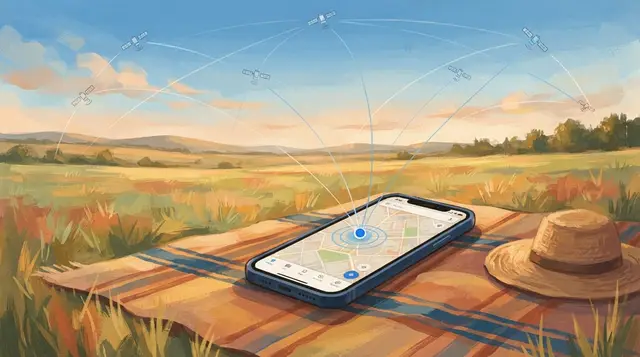 EVERYDAY TECHNOLOGY · NAVIGATION
How does GPS know where you are?
Satellites broadcast the time; your phone measures how late each signal arrives and turns the delays into a position. Why four satellites, why cities confuse it, and where relativity comes in.
Explore A CONVERSATION WITH YOUR CURIOSITYAsk it the way you would ask a person.
Talk through a question with Clevaa, a voice AI tutor with visual explanations. Ask follow-ups, request a simpler example, or type whenever you prefer.
Explore