
EVERYDAY SCIENCE · MAGNETISM
Why do magnets stick to the fridge?
A fridge door is not a magnet, but the steel in it is made of tiny magnetic regions that normally point every which way and cancel out. Bring a magnet close and those regions turn to line up with it, so that patch of door becomes a magnet for as long as the magnet is there, and the two pull on each other.
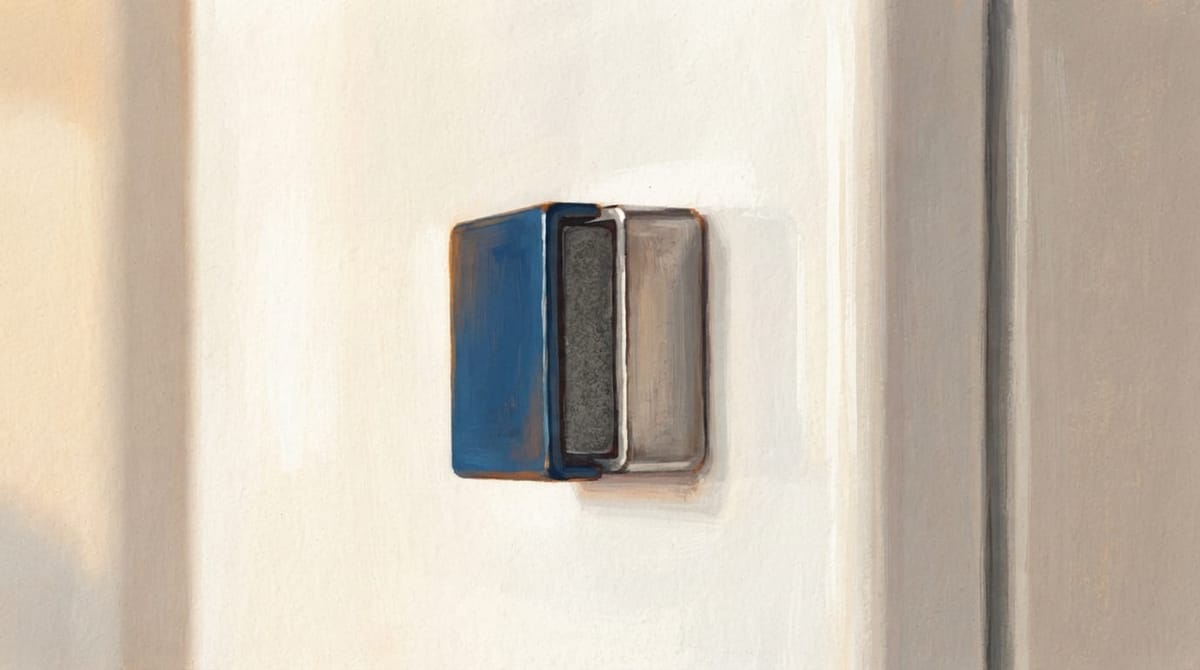
- Steel is full of tiny magnets
- A magnet turns them to face it
- The door pulls back
Not every metal will do
Try the same magnet on a steel door and on an aluminium pan. It grips the steel and slides off the aluminium. Being a metal is not what matters. What matters is whether the material is ferromagnetic, as iron and nickel are, and steel is mostly iron.
Every electron is a tiny magnet with a north and a south pole. In most materials the magnetism of one electron cancels that of another. In a ferromagnetic material the electrons line up with one another instead, so their small fields add up.
Read the source: National High Magnetic Field Laboratory: Magnetic domains
A patchwork of tiny magnets
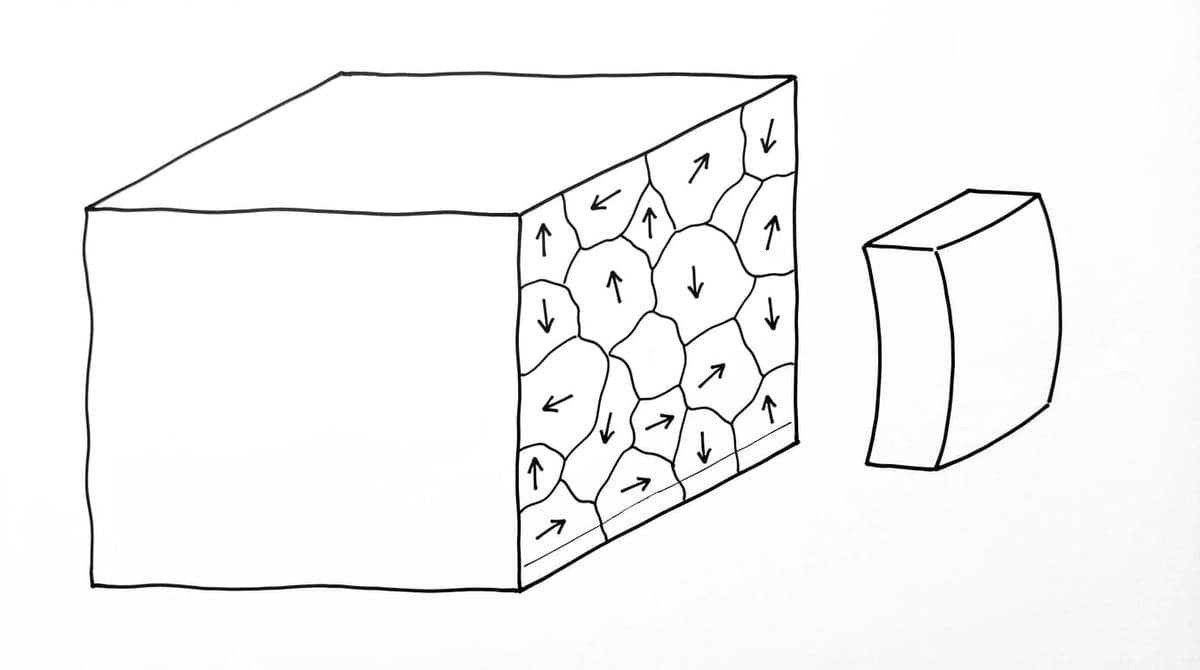
The lining-up happens in patches called magnetic domains. Inside one domain the atoms all point the same way, so each domain is a small, fully magnetised region. But in an ordinary piece of steel the domains point in different directions, and added together they come to nothing. That is why a steel door does not pick up paper clips by itself.
So the steel was never free of magnetism. It is full of it, pointing every way at once.
Read the source: Scientific American: Why don’t magnets work on some stainless steels?
The magnet lines them up
Hold a magnet near the steel and its field acts on the domains. Those already pointing the magnet’s way grow, others shrink, and the magnetism inside them turns into line. The patch of door under the magnet is now a magnet too, with its opposite pole facing the magnet’s, and opposite poles attract. The door pulls on the magnet exactly as hard as the magnet pulls on the door.
Distance matters. The closer the magnet, the more the domains respond, which is why one sheet of paper stays up and a thick wad slides to the floor. Take the magnet away and most of the domains go back to their jumble, though steel can keep a little of its magnetisation.
Read the source: Scientific American: Why don’t magnets work on some stainless steels? · National High Magnetic Field Laboratory: Magnetic domains
Why some stainless steel fridges refuse magnets
Stainless steel is still mostly iron, yet a magnet slides off many stainless doors. The difference is how the atoms are stacked. In ferritic stainless steels the atoms sit in one cubic arrangement and the steel is magnetic. In austenitic ones, such as the common Type 304 with about 18% chromium and 8% nickel, the nickel helps hold the atoms in a different arrangement, and that steel is usually not magnetic.
So “stainless steel is not magnetic” is half true. It depends on the type, and even Type 304 can become partly magnetic where it has been bent.
Read the source: Scientific American: Why don’t magnets work on some stainless steels?
A question worth taking into the lesson
“If the door becomes a magnet, why does it not stay one?” is the question to bring. Ask Clevaa to draw the domains before, during and after, then ask what would have to be different inside the steel for it to keep its magnetism.
Then explain it back: steel is full of tiny magnetic domains, they normally cancel, a magnet turns them to face it, and the door pulls back.
A few useful answers
Do magnets stick to all metals?
No. They hold on ferromagnetic materials such as iron, nickel and ordinary steel. Aluminium and many stainless steels will not hold a fridge magnet.
Does the fridge door stay magnetised afterwards?
Only slightly, if at all. When the magnet is removed most domains go back to pointing in different directions, though steel can keep some magnetisation.
Why will a magnet not stick to my stainless steel fridge?
Its door is probably an austenitic stainless steel such as Type 304. Its atoms are arranged differently from those of ordinary steel, and that arrangement is usually not magnetic.
TAKE THE NEXT QUESTION WITH YOU
Turn the explanation into a conversation.
Open this topic in Clevaa, choose a level, and ask the part you want to explore.
Hear magnets explained with pictures ↗You choose when to start. Session availability and usage limits may apply.
Keep exploring
 EVERYDAY TECHNOLOGY · NAVIGATION
How does GPS know where you are?
Satellites broadcast the time; your phone measures how late each signal arrives and turns the delays into a position. Why four satellites, why cities confuse it, and where relativity comes in.
Explore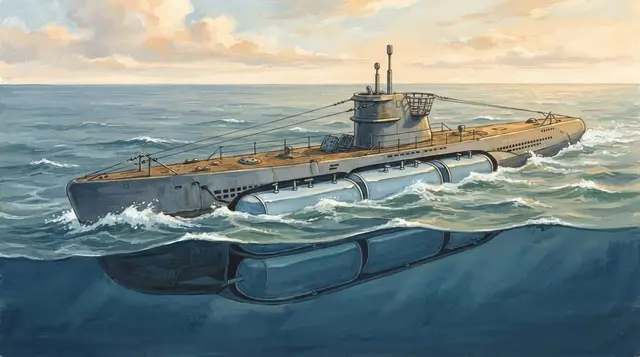 EVERYDAY TECHNOLOGY · SHIPS
How does a submarine dive and come back up?
A submarine sinks by letting seawater into its ballast tanks and rises by blowing the water out with compressed air. Why a steel ship floats at all, how a boat holds one depth, and what the diving planes do.
Explore LEARNING YOU CAN LOOK ATSee the idea you are trying to understand.
See ideas take shape with Clevaa, a visual AI tutor. Learn through spoken explanations, illustrations and diagrams, then ask about the part you want to understand.
Explore